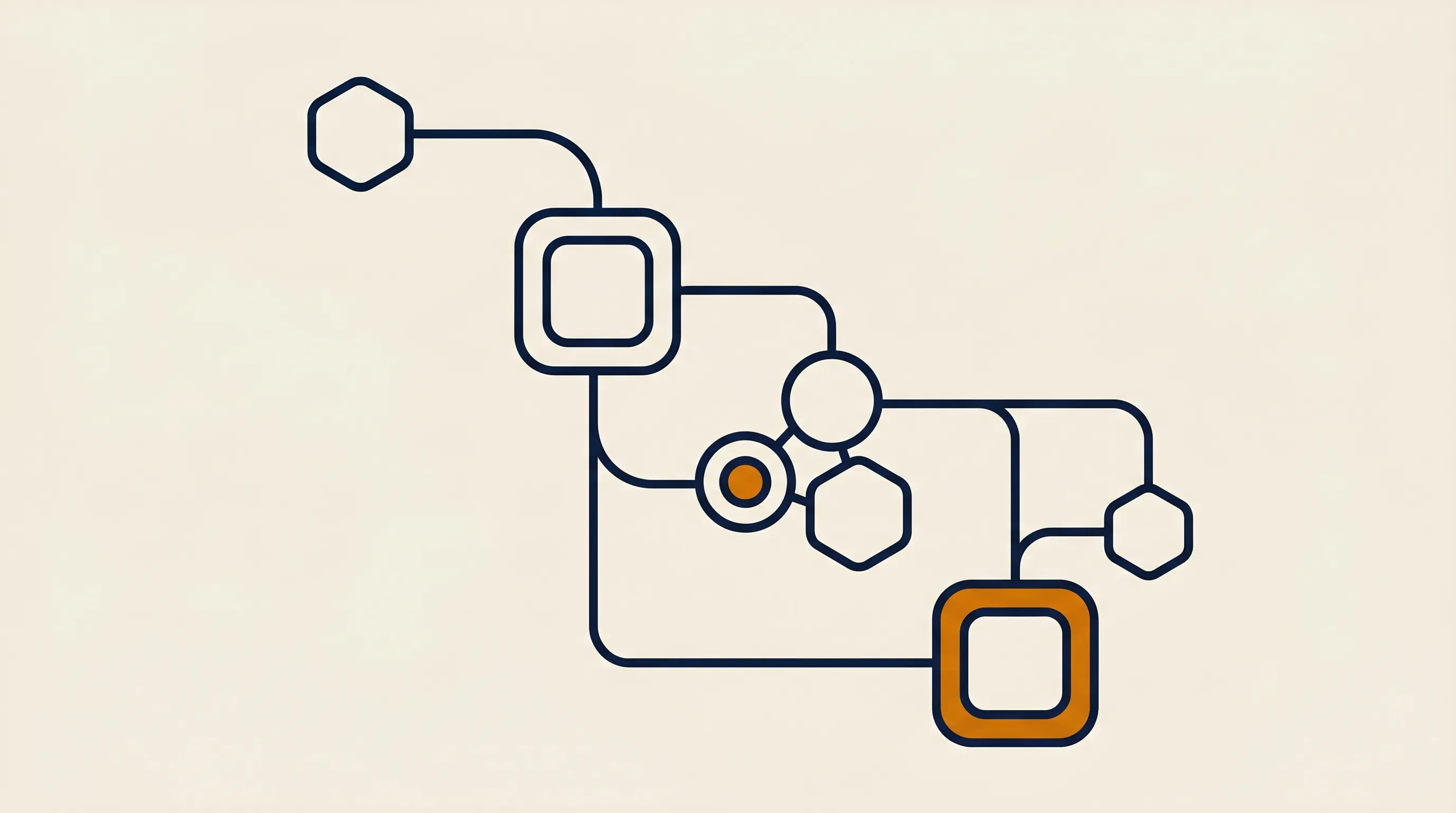
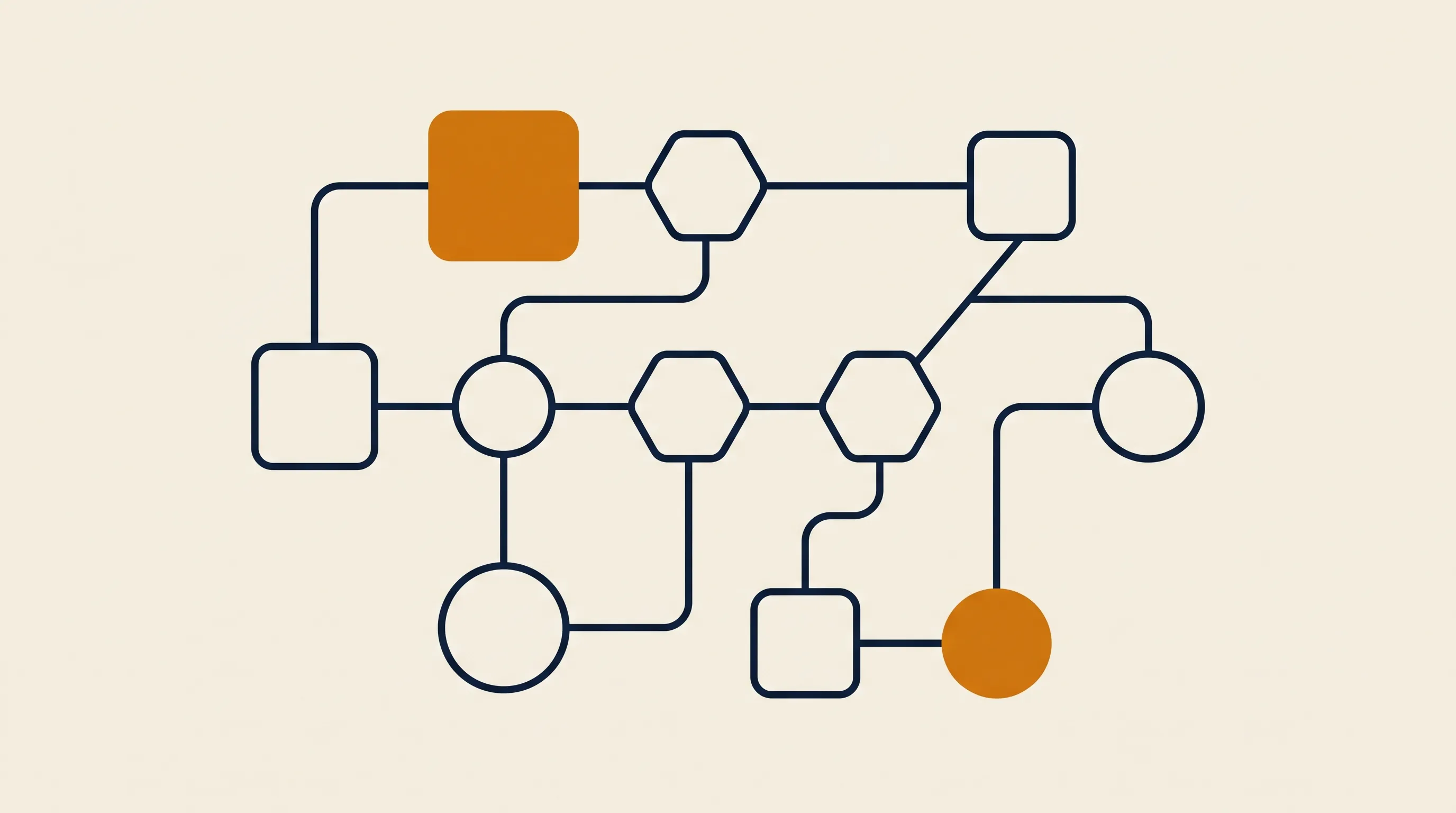
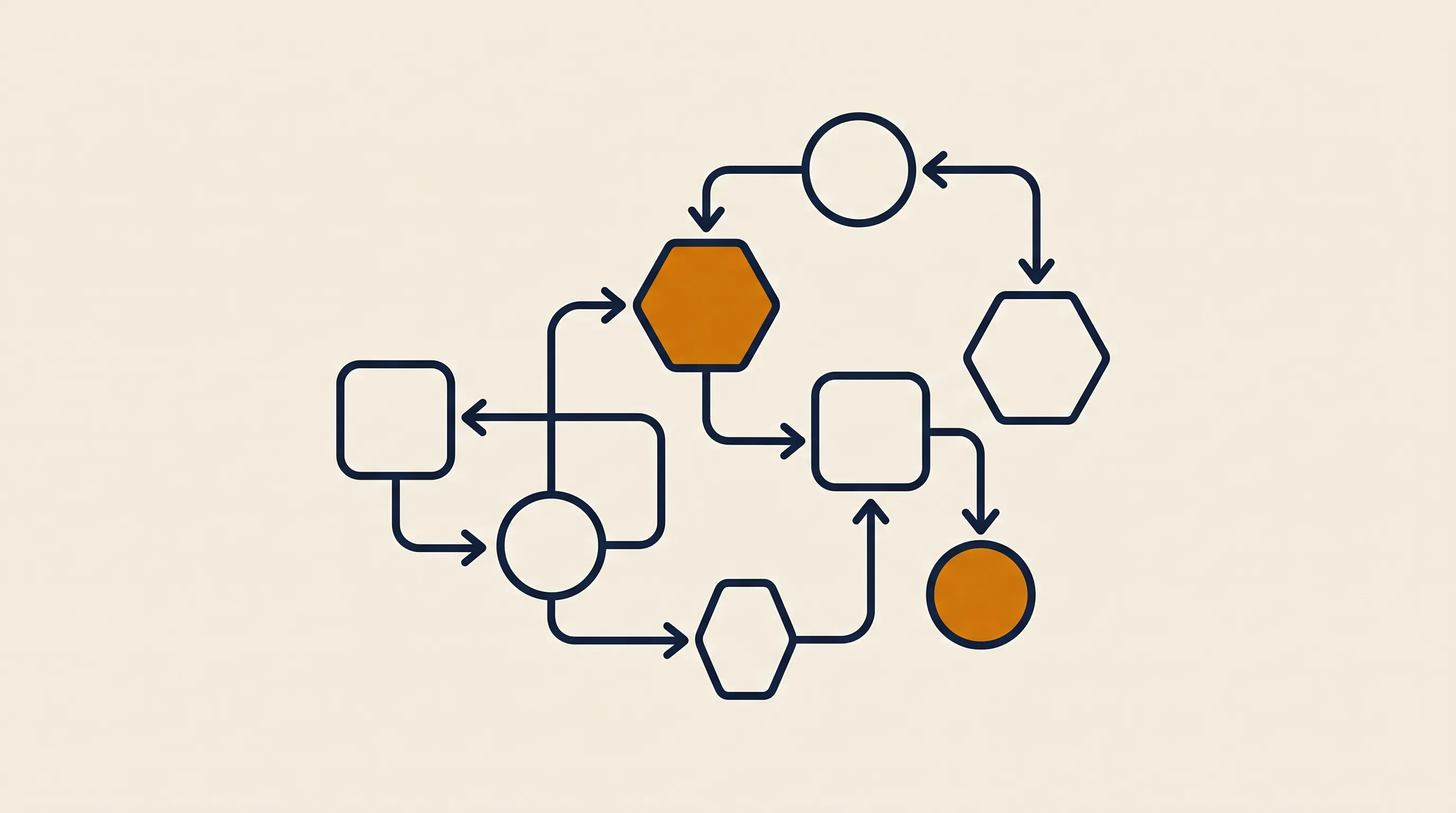
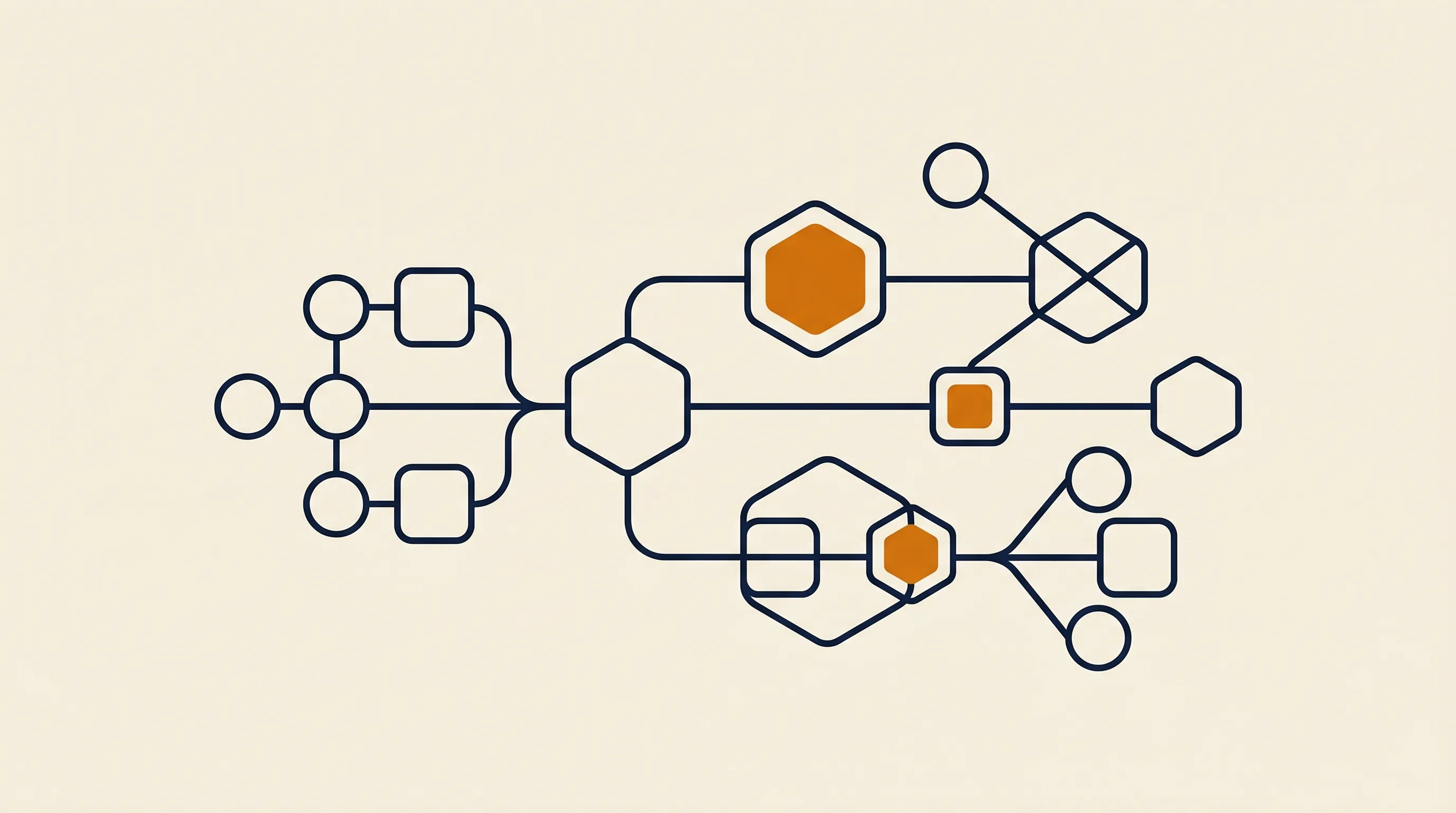
Every lead generation automation, regardless of which tools you pick, has the same anatomy: a source, an enricher, a qualifier, and a destination. Picture it as a relay where the lead is cleaned and checked at each handoff so only good records reach a salesperson.
- Source — where the lead originates: a website form, a paid ad lead form, a live-chat capture, a scraped list, or a CSV import.
- Enricher — a step that adds the data the source did not provide: company size, industry, role, verified email, LinkedIn URL.
- Qualifier — the dedup, validation, and scoring logic that decides whether this lead is worth a human's time.
- Destination — the system of record (your CRM) plus whatever sequence or notification fires next.
The mistake we see most often is building only the source-to-destination link and skipping the qualifier. That works in a demo and floods your pipeline with duplicates and tire-kickers in production. The qualifier is what separates a lead-gen toy from a system sales will actually trust. If you want the broader context for where this fits, our primer on what sales automation is maps how lead gen connects to the rest of the revenue motion.
Capture is the first real step, and the right method depends on where leads come from today.
The cleanest source. Point your form at a webhook or use the native integration so each submission pushes its fields directly into your workflow. No exports, no nightly imports — the lead exists in your CRM seconds after someone hits submit.
Lead-gen ad forms (the kind that pre-fill a user's details inside the platform) are gold because the data is already structured and verified. Connect them by webhook or a polling check so new leads sync continuously rather than being downloaded once a week, by which time they have gone cold.
For outbound, you build a list from a structured source — a directory, a map search, a job board — then push it through the same enrichment and validation steps inbound leads get. Treat scraped data as raw input that must be cleaned and verified before anyone emails it. Skipping that step is how teams end up with high bounce rates and damaged sending reputation.
The principle across all sources: capture once, into one pipeline. Every lead, no matter where it came from, should pass through the same enrichment and qualification logic so your data stays consistent.
Enrichment is where automation saves the most rep hours. Instead of a salesperson googling each company, an enrichment API takes the email or domain you captured and returns company size, industry, location, role, and a verified contact — in milliseconds. Your workflow calls the API, merges the result onto the record, and moves on.
Qualification then runs on that enriched record. Keep the scoring rubric simple and explicit so you can debug it later:
- Fit signals — company size, industry, and role match your ideal customer profile.
- Intent signals — the lead requested a demo, visited pricing, or opened a high-intent form.
- Disqualifiers — personal email domains for a B2B product, competitors, regions you do not serve.
Assign points, set a threshold, and only leads above it reach a human. Everything below the line goes into a long, low-touch nurture instead of cluttering a rep's queue. The discipline of scoring is what keeps automation from becoming spam — you are filtering for the leads worth a real conversation, not maximizing raw volume. For inspiration on what mature pipelines do at this stage, our roundup of sales automation examples shows enrichment and scoring patterns in context.
Here is the concrete build sequence we follow. You can implement it in a no-code workflow tool, a marketing platform, or custom code — the logic is identical.
- Define the trigger. A new form submission, ad lead, or list row is the event that starts everything.
- Normalize the payload. Map incoming fields to a standard shape so a lead from a form and a lead from an ad look identical downstream.
- Deduplicate. Look the lead up in your CRM by email or domain before doing anything else. Matching records get updated, not re-created.
- Enrich. Call your enrichment API and merge the result.
- Validate. Verify the email is real and the required fields are present. Bad records go to an exception queue, not the pipeline.
- Score and branch. Apply the rubric. Hot leads go one way, nurture leads another.
- Write and notify. Create or update the CRM record and alert the owner or kick off a sequence.
The dedup and validate steps are the ones teams skip and regret. Here is a compact example of the normalize-and-route logic as a single function — the kind of code that sits inside a workflow node:
// Runs on each incoming lead. Returns the lead plus a routing decision.
function processLead(raw) {
  const lead = {
    email: (raw.email || "").trim().toLowerCase(),
    company: raw.company || raw.domain || "",
    source: raw.source || "unknown",
  };

  // 1. Validate: reject anything we cannot act on.
  const validEmail = /^[^@\s]+@[^@\s]+\.[^@\s]+$/.test(lead.email);
  if (!validEmail) return { ...lead, route: "exception", reason: "bad_email" };

  // 2. Score against a simple, explicit rubric.
  let score = 0;
  if (raw.companySize >= 50) score += 30;          // fit
  if (raw.requestedDemo) score += 40;               // intent
  if (/gmail|yahoo|hotmail/.test(lead.email)) score -= 20; // disqualifier

  // 3. Route on the score.
  lead.score = score;
  lead.route = score >= 50 ? "sales" : "nurture";
  return lead;
}
Notice the function refuses to guess. A malformed email is routed to a human queue rather than written to the CRM as a corrupt record. That single rule prevents most of the data-quality problems that sink lead generation automation projects.
There is no single right stack — the best choice depends on what you already run and how much you want to control. In our experience, three categories cover most needs.
Tools that bundle forms, scoring, email, and a CRM are the fastest way to start. Everything is pre-connected, so a non-technical operator can ship a working pipeline in an afternoon. The trade-off is cost at scale and limited flexibility once your logic gets non-standard.
General-purpose lead generation automation tools that connect any app to any other app give you far more control. You wire the exact sequence above — capture, enrich, dedup, score, route — across whatever systems you use. This is our default for teams that have outgrown a single platform but do not want to maintain bespoke code. It is also the approach behind most of our sales automation work, where we build the pipeline once and let it run.
When volume is high or the logic is genuinely unique, a small service calling enrichment and CRM APIs directly is cheapest per lead and infinitely flexible. The cost is engineering time and maintenance, so we reserve it for cases where the platform options genuinely can't keep up.
Most teams land on a hybrid: a workflow platform orchestrating a CRM, an enrichment API, and an email tool. Start with what you have and add pieces only when a real bottleneck demands it.
Automating capture without automating the next step just creates a faster way to ignore leads. The handoff is where conversion is won or lost.
For sales-ready leads, the workflow should notify the owner instantly and, ideally, fire the first touch automatically — a personalized intro that buys time before the rep can respond. For nurture leads, it enrolls them in a sequence that educates over weeks and re-scores them as they engage, promoting anyone who heats up. Building that side well is its own discipline; our guide to sales follow-up automation covers the cadences and triggers that keep leads moving without feeling robotic.
The rule that keeps this honest: every automated lead should have a defined next step before you turn the system on. If a lead can arrive and then sit with nothing scheduled to happen, you have built a leak, not a funnel.
We have rebuilt enough broken pipelines to know where they fail. Avoid these and you are most of the way to a system that lasts.
- No deduplication. Without a lookup-before-write step, the same person becomes five records and reps trip over each other. Dedup first, always.
- Scoring everyone as hot. If every lead reaches sales, the score is meaningless and reps start ignoring the queue. A threshold only works if some leads fall below it.
- No exception handling. Real data is messy. Without a queue for records that fail validation, bad leads either corrupt the CRM or vanish silently. Route failures to a human.
- Over-automating the human moment. Automate research, routing, and reminders — not the relationship. A wholly robotic outreach sequence converts worse than a timely, genuine one.
- Building and forgetting. Sources change, APIs deprecate, forms get redesigned. A lead-gen pipeline needs someone watching error rates, or it degrades into silent failure.
The teams that win treat lead generation automation as a living system: instrument it, watch where leads stall, and tighten the rules over time rather than setting it once and walking away.
A focused pipeline — capture, enrich, dedup, score, route, notify — is genuinely a days-to-weeks project, not a quarter-long one, provided you resist the urge to automate everything at once. We typically ship production automations like this in around 14 days: one source wired end to end, validated against real leads, with monitoring in place, then expanded from there.
The sequencing matters more than the speed. Get one source flowing cleanly into the CRM with enrichment and scoring before you add a second. A narrow pipeline that works beats a broad one that quietly drops leads, and it gives your team something to trust while you extend it.
Lead generation automation is not about replacing salespeople with software — it is about handing the machine the mechanical work so your team can spend its hours where judgment and relationships actually move deals. Start with one high-volume source, build the full capture-enrich-validate-score-route chain for it, and only expand once it runs reliably. The pipeline that captures every lead, cleans it, and puts it in front of the right person within minutes will outperform a bigger, messier funnel every time. Build narrow, instrument everything, and let the system earn your team's trust before you scale it.